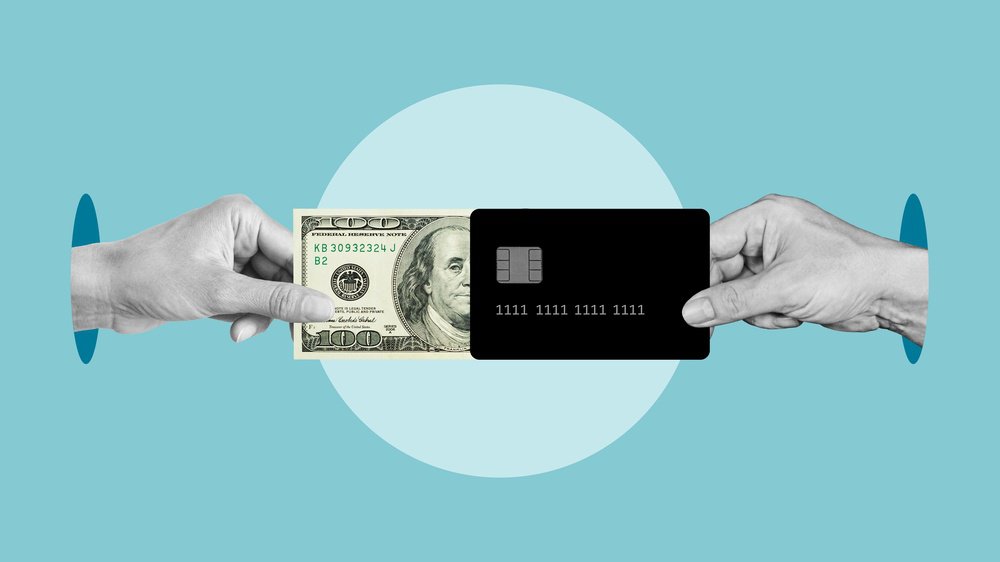
Payment acceptance costs are rising, and businesses across the country are actively looking for ways to offset them. Two of the most common strategies are credit card surcharges and cash discount programs, but neither can be implemented without a clear grasp of the legal landscape. State laws, card network rules, and consumer protection regulations all intersect in ways that make compliance a genuine operational challenge. Businesses that skip this homework expose themselves to fines, chargebacks, and potential loss of card acceptance privileges.
The Difference Between Credit Card Surcharges and Cash Discounts
These two strategies are often confused, but they operate on different legal and structural foundations. A credit card surcharge adds a fee on top of the listed price when a customer pays with a credit card. A cash discount, by contrast, starts with a higher base price and removes a portion of it when the customer pays with cash or a gift card. The customer ends up paying the same amount in either scenario, but how that pricing is communicated and structured determines which regulations apply.
The distinction matters for more than just language. In states where surcharging is prohibited, cash discount programs are typically still permitted. Businesses that conflate the two models, or implement one while calling it the other, open themselves up to enforcement actions. Cash discounting operates from a posted price and reduces it. Surcharging starts from a base price and increases it. That directional difference shapes everything from signage requirements to card brand compliance.
Where Credit Card Surcharges Stand in 2026
Surcharging is legal in the majority of U.S. states, but the regulatory picture remains uneven. As of 2026, Connecticut, Maine, Massachusetts, and California prohibit credit card surcharges. California's ban took effect under Senate Bill 478 in July 2024, making it one of the more significant recent developments in this area. Puerto Rico also prohibits the practice.

Several states permit surcharging but impose additional restrictions. Colorado caps surcharges at 2% of the transaction amount. New York, New Jersey, Nevada, and South Dakota limit surcharges to the merchant's actual cost of card acceptance. Minnesota, under rules that took effect in January 2025, requires surcharges to be built into the advertised price rather than added at checkout.
Illinois introduced a 1% cap and, starting in July 2026, will prohibit charging interchange fees on the tax and gratuity portions of a transaction under certain conditions. Businesses operating in these states face a narrower window for compliance than a simple legal/illegal framework would suggest.
Credit Card Surcharges Network Rules Add Another Layer
Even in states where surcharging is legal, merchants must satisfy the requirements set by Visa and Mastercard before implementing a program. Both networks require written notification to the card brand and the merchant's acquiring bank at least 30 days before surcharging begins. Skipping this step is a direct violation of network rules, regardless of whether state law allows the practice.
Visa caps surcharges at 3% of the transaction amount or the merchant's actual processing cost, whichever is lower. Mastercard's cap is broadly similar, allowing up to 4%, but also requires the fee not to exceed the merchant's actual cost of acceptance. Neither network permits surcharging on debit or prepaid cards.
Under the Durbin Amendment to the Dodd-Frank Act, surcharging debit card transactions is prohibited in all states, full stop. Businesses that apply a surcharge to a debit transaction, even unintentionally, face serious exposure.
Disclosure requirements are strict and non-negotiable. Signage must be posted at every point of entry and at every point of sale. The surcharge must appear as a separate line item on the customer's receipt. For ecommerce transactions, the fee must be disclosed before the customer completes checkout. Non-compliance with disclosure rules can result in network fines ranging from $50,000 to $1 million.
Common Mistakes That Create Compliance Exposure
Many businesses run into trouble not because they choose to ignore the rules, but because the rules are genuinely difficult to track. One of the most frequent errors is applying a surcharge uniformly across all card types without filtering out debit transactions. Modern terminals can be configured to distinguish credit from debit at the point of sale, but only if the software is set up correctly from the start.
Another common misstep is operating a surcharge program in a state where the law has recently changed. California and Minnesota both introduced significant changes in the past two years. Businesses that implemented programs before those laws took effect and did not update their practices are now operating out of compliance. Multi-location businesses are particularly vulnerable to this kind of drift, especially when payment configurations are managed centrally without regular legal review.

Misrepresenting a surcharge as a cash discount is a third failure point. Calling a fee a "discount" when it is structurally a surcharge does not provide legal cover in a ban state. Regulators and card networks look at the mechanics of the program, not just the label applied to it.
Why Cash Discount Programs Are Gaining Ground
For businesses in states where surcharging is prohibited, or for those that want to avoid the complexity of surcharge compliance, cash discount programs offer a practical alternative. Cash discounting is permitted in all 50 states and does not require advance notification to card networks. The legal framework is more straightforward, and consumer response tends to be more favorable. Customers generally react more positively to receiving a discount than to being assessed a fee.
A properly implemented cash discount program displays the non-cash price at checkout alongside the discounted cash price. Signage at the point of entry informs customers of the pricing structure before they reach the register. When customers pay with cash or a gift card, the service charge is automatically removed. The mechanics are simple, but the technology behind the terminal must be configured correctly to apply the adjustment accurately and consistently.
Take Charge of Credit Card Surcharges With the Right Payment Partner
Tidal Commerce helps merchants implement compliant cash discount programs and navigate the broader landscape of payment acceptance costs. Our payment solutions are built around transparency, and our team works with each merchant to ensure programs are structured correctly from day one.
Call us at 1-855-51-TIDAL for more information.