
Selling POS solutions effectively starts long before a demo. Agents who skip the discovery phase often find themselves demoing the wrong product, proposing unnecessary customizations, or fielding avoidable support tickets after the sale closes. A structured discovery process eliminates most of these problems. It gives agents a reliable way to match a merchant's real operational environment to the right system configuration, and it gives merchants clarity about what they are actually getting.
Why Discovery Reduces Post-Sale Problems
Many post-sale support issues trace back to gaps in the pre-sale conversation. A merchant who processes 400 transactions during a Friday dinner rush has different throughput needs than one who processes 400 transactions across an entire week. A boutique retailer with 200 SKUs has different inventory demands than a restaurant managing ingredients by unit weight.
Without these details, agents make assumptions, and assumptions lead to mismatched configurations. Accurate discovery also reduces unnecessary customization requests. When merchants feel the system fits their workflow, they are less likely to request changes outside the standard configuration.
This protects the agent's time and keeps implementations on schedule. Post-sale surprises, whether around feature availability, hardware compatibility, or reporting capabilities, erode merchant trust quickly. Thorough discovery prevents them.
The Five Discovery Dimensions for POS Solutions
A practical discovery framework covers five areas. Each one surfaces a different layer of operational complexity, and together they give agents a complete picture of what the merchant actually needs from their POS solution.
Peak Transaction Load
Peak transaction load determines hardware and throughput requirements. Agents should ask about the busiest hour of the day, the busiest day of the week or year, and whether that volume is predictable or seasonal.
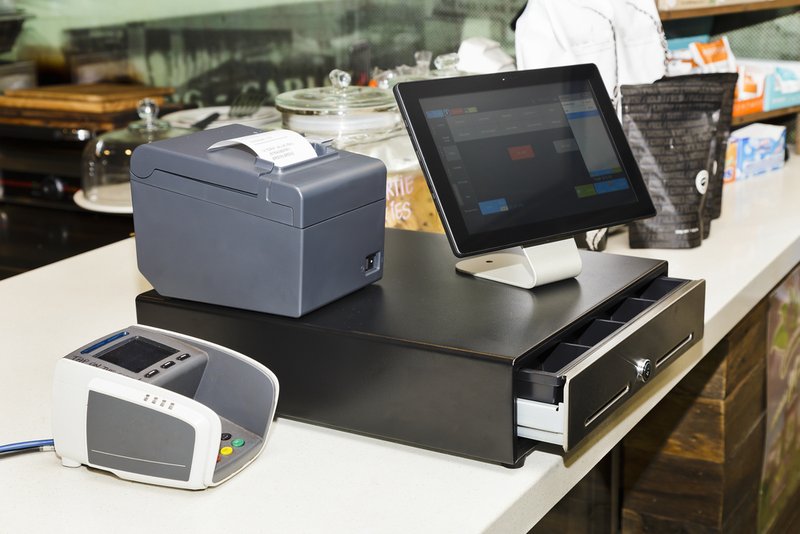
A business that spikes during a holiday weekend needs a system that handles high volume without slowdowns. One that runs steadily across the week may prioritize reporting and accounting features over raw throughput.
Inventory Complexity
Inventory complexity shapes which feature tier makes sense. Some businesses stock a few dozen items with fixed prices. Others manage hundreds of variants, track ingredient-level quantities, or need real-time stock updates across multiple locations.
Agents should ask whether the merchant sells by weight, manages modifiers or build-your-own options, and syncs inventory to an ecommerce channel. The answers determine whether basic inventory tools are sufficient or whether more advanced configuration is required.
Payment Channels
Payment channels establish which hardware and software components belong in the proposal. A restaurant that takes orders tableside needs mobile card readers. A retailer that sells online alongside its physical location needs ecommerce support that connects to the same inventory and reporting system.
A business that sends invoices to clients needs built-in invoicing tied to payment collection. Agents who clarify the full channel picture avoid proposing hardware or features the merchant will never use.
Permissions and Access Control
Permissions and access control matter most in businesses with multiple staff roles. A manager who needs full reporting access has different system requirements than a cashier who should only process transactions.
Agents should ask whether the business uses timed shifts, whether different roles need different feature access, and whether owner-level data should be restricted from front-line staff. These questions shape how the system is configured from day one.
Staff Handoffs
Staff handoffs reveal operational patterns that affect table management, order routing, and tip handling. Restaurants with shared tables, hotels with multi-department charges, and retail stores with layaway or split-payment workflows all have handoff scenarios that the POS must support cleanly. Agents who surface these scenarios during discovery can demo the relevant features rather than discovering gaps afterward.
Translating Discovery Into a Demo Script
Discovery isn't just about gathering information. It is about building a demo that makes the merchant feel seen. When a restaurant owner walks through a demo and sees their floor plan, modifier structure, and employee roles already reflected in the system, the sale becomes confirmation rather than a pitch.
Agents should use discovery answers to build a short pre-demo brief that maps each operational requirement to a specific feature or configuration. The brief keeps the demo focused and documents the match between requirements and capabilities. That documentation becomes the foundation for acceptance criteria after the sale.
Matching POS Solutions to Merchant Requirements and Capabilities
Once discovery is complete, agents can evaluate available configurations against confirmed merchant requirements. This comparison should be honest and specific. Merchants who learn about a feature gap after signing are significantly harder to retain than those who hear about it during the sales conversation.
The key distinction to communicate clearly is that most merchant requirements can be met through configuration, not custom development. Features like employee role management, surcharge and cash discount setup, QuickBooks synchronization, and multi-store reporting are standard capabilities in well-built POS solutions.

Agents who explain this help merchants avoid overestimating implementation complexity and cost. A strong POS solution combines an intuitive interface, customizable reporting, and robust inventory management in a single system. When those capabilities match what discovery uncovered, implementation moves smoothly.
How POS Solutions Support Ecommerce and Growth
Merchants with both a physical location and an online channel need POS solutions that handle both without creating two separate management systems. Ecommerce integration means in-store inventory updates reflect online, and online orders feed into the same reporting dashboard as in-person transactions.
This reduces manual reconciliation and gives merchants a single view of their business. For merchants considering ecommerce for the first time, the decision carries less risk when the POS handles both channels natively. Agents who surface this during discovery, especially when a merchant has mentioned adding online ordering, position the system as a growth enabler.
Growth readiness also applies to multi-location management. A merchant opening a second location needs the same system to scale without requiring a full setup from scratch, and confirming that capability during discovery gives growing businesses a reason to commit now.
The Business Case for Structured POS Solutions
Tidal Commerce provides industry-specific POS solutions built for U.S. merchants across retail, restaurant, and hospitality environments. Our custom-built Waves POS supports tiered packages, configurable features, and hardware options designed to match a wide range of operational workflows, from single-location retail to multi-unit restaurant operations.
Our platform includes employee role management, inventory tracking, ecommerce support, and built-in analytics through the Atlas reporting dashboard. It also supports cash discount and surcharge programs, QuickBooks synchronization, and multi-store management. For more information, call 1-855-51-TIDAL.