
Accepting card payments has become a baseline expectation for nearly every type of organization, and nonprofits are no exception. A nonprofit merchant account is not simply a standard business account with a different label. It is a payment processing setup designed to accommodate the specific ways nonprofits collect revenue, manage donor relationships, and maintain financial accountability. Organizations that rely on a generic merchant account often leave money on the table and expose themselves to unnecessary costs and compliance risks.
How Nonprofit Revenue Differs From For-Profit Revenue
For-profit businesses generate revenue through the sale of goods or services at a consistent price point. Nonprofits collect money in fundamentally different ways. Donations, membership dues, event ticket sales, merchandise, and grant-related transactions all flow through a single organization, often with different tax and reporting implications attached to each.
This diversity of revenue types creates complexity that a standard merchant account is not built to handle efficiently. Donation payments, for example, are not product sales and should not be processed in the same way. Organizations that use a generic account may find that their payment infrastructure creates unnecessary friction for donors and added administrative burden for staff.
The Cost of Using the Wrong Merchant Account
Processing fees are one of the most significant controllable costs for any organization that accepts card payments. Standard merchant accounts apply commercial processing rates, which do not account for the nature of nonprofit transactions. Every percentage point in fees represents a direct reduction in funds available for mission-critical programs and operations.
Many payment networks offer reduced interchange rates for verified nonprofit organizations. These rates are not automatically applied. They require an account structured specifically for nonprofit processing, with the appropriate merchant category codes and documentation in place. An organization using a standard commercial account will not qualify for these reduced rates, regardless of its tax-exempt status.
Donor Trust and Payment Security
Donors who contribute online are entrusting an organization with sensitive financial information. That trust is not unconditional. Donor confidence in an organization's data security practices directly influences giving behavior and long-term retention. A security incident involving donor payment data can have lasting consequences on fundraising capacity.
A specialized nonprofit merchant account includes the same security infrastructure required of any PCI DSS-compliant payment environment. End-to-end encryption and tokenization protect donor card data throughout the transaction. Organizations that can demonstrate a commitment to data security are better positioned to build donor confidence and sustain recurring giving relationships over time.
Online Donation Processing and Ecommerce Capabilities
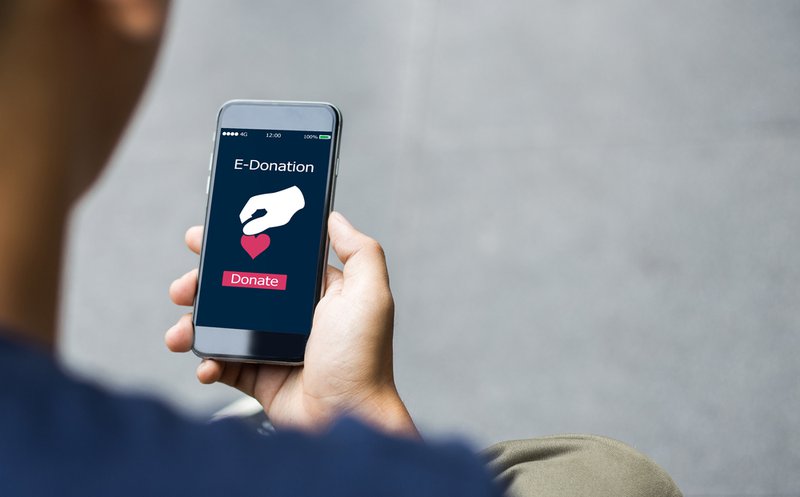
Online giving has become the dominant channel for donor engagement. According to the Nonprofit Source, online donations have grown year over year, with mobile giving increasing at an even faster rate. An organization that cannot accept online payments seamlessly is at a structural disadvantage in competing for donor attention and dollars.
A nonprofit merchant account built for digital fundraising supports online donation forms, recurring billing for monthly donors, and ecommerce capabilities for merchandise or event ticketing. Payment gateways that integrate with nonprofit CRM and fundraising platforms reduce the manual reconciliation work that burdens administrative teams. The ability to accept all major credit and debit cards, as well as contactless payment methods, removes barriers that would otherwise cause donors to abandon a transaction before completing it.
Managing Recurring Donations and Membership Dues
One-time donations are valuable, but recurring donors represent the most stable and predictable segment of a nonprofit's funding base. Monthly giving programs consistently outperform one-time campaigns in long-term donor value. Processing recurring payments requires a merchant account with robust billing management capabilities, including the ability to store payment credentials securely and retry failed transactions automatically.
Membership organizations face a similar requirement for dues collection. Annual or monthly membership fees need to be collected reliably, with automated reminders and renewal processing that minimizes lapsed memberships. An account that cannot support recurring billing forces organizations to handle renewals manually, which is time-consuming and prone to collection gaps that reduce overall membership revenue.
Chargeback and Fraud Exposure in Nonprofit Processing
Chargebacks occur when a cardholder disputes a transaction with their bank. For nonprofits, chargebacks can arise from unauthorized use of a donor's card, confusion about recurring donation charges, or disputes over event refunds. Each chargeback carries a fee and, if left unmanaged, can result in a processor terminating the merchant account entirely.
Fraud is another real exposure for organizations that collect payments online. Fraudsters frequently use nonprofit donation forms to test stolen card numbers in small increments, a practice known as card testing. A specialized merchant account with fraud detection tools and chargeback assistance provides the infrastructure needed to identify and respond to these threats before they escalate into larger losses.

Reporting, Reconciliation, and Financial Accountability
Nonprofits operate under a higher standard of financial accountability than most for-profit businesses. Board reporting, grant compliance, and annual audits all require accurate, detailed financial records. Payment processing data needs to reconcile cleanly with accounting systems, and transaction records must be accessible and well-organized.
A merchant account designed for nonprofit operations provides reporting tools that align with these accountability requirements. Detailed transaction histories, settlement reports, and deposit records reduce the time staff spend on reconciliation and make audit preparation more straightforward. Integrations with accounting platforms eliminate the need for manual data entry, reducing the risk of errors in financial records.
Choosing a Nonprofit Merchant Account That Supports the Mission
Every dollar an organization spends on payment processing is a dollar not directed toward its mission. The right merchant account minimizes those costs while providing the security, functionality, and support that nonprofit payment operations require. Organizations should evaluate processors not just on rate, but on their understanding of how nonprofits operate and the depth of service they provide after the account is set up.
Tidal Commerce offers nonprofit merchant account services built around the specific needs of mission-driven organizations. Our payment processing solutions include industry-leading PCI DSS security, fraud coverage, chargeback assistance, and 24/7 U.S.-based technical support. We work directly with each organization to identify the right rates and tools to reduce costs and support growth.
Call us at 1-855-51-TIDAL for more information.


